Choosing a high-quality container house from China is only the beginning. Long-term comfort depends on regular care, suitable installation, and honest inspections. This guide explains how to maintain a container house through practical routines and professional checks.
Steel walls need protection from moisture, salt air, and damaged coatings. Inspect the exterior after heavy rain, especially around roof seams, welded joints, doors, and window frames. Small rust spots should be cleaned, dried, treated, and repainted with compatible protective products. Do not cover active corrosion with fresh paint. That shortcut often creates larger repairs later.
Inside, check for condensation near corners, ceilings, and insulated panels. Open windows when weather allows, and keep ventilation systems clean. A damp smell may indicate hidden moisture, not poor housekeeping. Examine plumbing connections under sinks and around bathrooms every few months. Confirm that water drains away from the foundation and does not collect beneath the container. Follow the manufacturer’s maintenance instructions and consult qualified contractors for electrical, structural, or roofing concerns. Local climate matters greatly. A coastal home requires more frequent corrosion checks than one in a dry inland area.
Maintenance records improve reliability. Note inspection dates, photographs, paint products, and repaired areas. Some owners delay minor work because the house still looks attractive. That judgment can be costly. A careful inspection may reveal loose fasteners, cracked sealant, or blocked drainage before serious damage develops. The process is not perfect, and maintenance plans may need adjustment after the first rainy season. Steady attention, rather than expensive emergency repairs, helps a container house remain safe, dry, and comfortable.
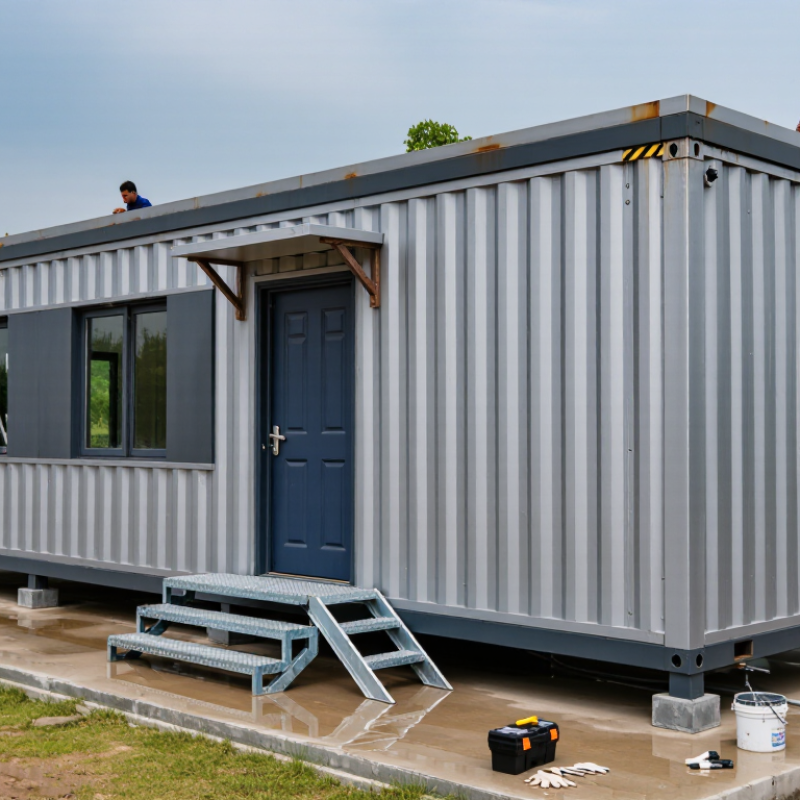
China Best Container House: How to Maintain It?
Before maintaining a container house, confirm its basic geometry. ISO 668 dimensions provide a reliable reference for common container lengths, widths, and heights. Do not assume every converted unit follows them. Measure the external length, width, and height on site. Record door openings, corner fittings, and floor level changes. Small deviations can affect transport, foundations, and replacement panels. An inspection sheet with photographs creates useful evidence.
Steel identification matters just as much. Ask for mill certificates, coating details, weld procedures, and material grades. Do not accept a vague statement such as “heavy steel.” Common structural steels differ in yield strength, weldability, and corrosion performance. A qualified engineer should compare the actual grade with the design calculations. That step is often skipped. It should not be. Check weld toes and cut edges for rust, especially around wet floors and roof penetrations. Surface rust may look harmless, but hidden section loss can reduce capacity.
Request structural load data before adding insulation, solar equipment, mezzanines, or rooftop storage. The documents should identify floor loads, roof loads, wind pressure, seismic assumptions, and lifting points. Corner posts and beams need special attention. Never cut them casually. During routine care, keep drainage clear and inspect bolts, welds, seals, and painted areas every six months. Use measured corrosion depth, not visual guesses alone. Records should include dates, locations, photos, and corrective work. Many projects have incomplete original data. Conservative engineering review is safer than optimistic maintenance.
| Category | Item to Confirm | Reference Value or Requirement | Maintenance or Inspection Guidance | Technical Basis |
|---|---|---|---|---|
| ISO 668 Dimensions | Nominal 20-foot standard container external size | Length: 6,058 mm; width: 2,438 mm; height: 2,591 mm | Measure the finished unit after installation and keep access clear around corner fittings, doors, and service connections. | ISO 668 nominal Series 1 freight-container dimensions |
| ISO 668 Dimensions | Nominal 40-foot standard container external size | Length: 12,192 mm; width: 2,438 mm; height: 2,591 mm | Check that foundations are aligned with the four corner posts and that the long side rails are not bearing on uneven supports. | ISO 668 nominal Series 1 freight-container dimensions |
| ISO 668 Dimensions | High-cube height | External height: 2,896 mm; this is 305 mm higher than the 2,591 mm standard height | Confirm local transport clearance, overhead utility clearance, door height, and planning approval before placement. | ISO 668 high-cube Series 1 height designation |
| External Envelope | Corner-fitting position and handling points | Corner fittings must remain accessible and properly aligned for lifting, stacking, or securing. | Inspect for distortion, cracked welds, corrosion, and blocked apertures; do not weld lifting devices to the structure without engineering approval. | ISO 668 dimensional system and ISO 1161 corner-fitting interface |
| Structural Steel | Weathering-steel side panels and structural members | Common container steels include weathering-steel grades such as SPA-H, S355J2W, or equivalent grades, subject to the actual mill certificate. | Remove standing water and salt deposits; repair coating damage and corrosion according to the approved coating system. | Typical container material practice; exact grade must be verified from material certificates. |
| Structural Steel | Structural steel identification | Confirm steel grade, yield strength, tensile strength, thickness, weldability, and heat or batch traceability from the mill certificate. | Do not assume a steel grade from paint color or appearance; retain certificates with the building inspection file. | EN 10204 inspection-document principles and applicable material standard |
| Structural Load | Maximum gross mass | A widely used ISO freight-container rating is 30,480 kg; the certified maximum gross mass is the value shown on the container safety approval plate. | Never exceed the marked gross mass, including the modified structure, furniture, equipment, occupants, and stored materials. | ISO 1496-1 and the individual container safety approval plate |
| Structural Load | Floor loading | The original freight-container floor design is not automatically a residential floor rating. The allowable uniform and concentrated loads must be calculated for the modified floor system. | Distribute heavy equipment with suitable load-spreading plates and keep concentrated loads away from unsupported floor areas. | Project-specific structural design; ISO container ratings do not replace building-code calculations. |
| Structural Load | Roof load and snow load | The original container roof is not a general-purpose occupied roof or roof terrace. Design snow, rain, maintenance, and imposed loads for the local site. | Prevent blocked roof drainage and remove excessive snow where required by the local engineer or authority. | Local building code and site-specific structural calculations |
| Structural Load | Wind and seismic resistance | Anchorage, bracing, openings, and foundation reactions must be designed for the project location and exposure category. | Inspect anchor bolts, welds, bracing, and foundation contact points after severe storms, earthquakes, or accidental impact. | Applicable local wind and seismic design standards |
| Openings and Modifications | Cut-outs for windows, doors, and services | Any removal of side walls, roof panels, rails, corner posts, or cross-members requires a documented reinforcement design. | Check reinforcement welds and surrounding panels for cracks, deformation, and water entry at least annually. | Project-specific engineering design; original freight-container capacity cannot be assumed after alteration. |
| Corrosion Control | Rust, coating breakdown, and galvanic corrosion | Pay particular attention to the bottom rails, corner posts, door frame, roof edges, welds, and areas exposed to coastal salt. | Carry out a visual inspection every 6–12 months; clean, dry, prepare, prime, and topcoat damaged areas using compatible products. | General steel-maintenance practice and the approved coating manufacturer’s system |
| Water Management | Roof, flashing, sealant, and drainage | All roof penetrations, door seals, window joints, plumbing penetrations, and perimeter flashings must remain weather-tight. | Clean gutters and drains at least twice a year and after storms; replace cracked or detached sealant promptly. | Building-envelope maintenance practice |
| Ventilation and Condensation | Interior humidity and thermal bridging | Maintain ventilation and continuous insulation appropriate to the climate; uninsulated steel surfaces can develop condensation. | Check for mold, damp insulation, concealed rust, and blocked ventilation openings; use mechanical ventilation where necessary. | Building-physics and indoor-air-quality design principles |
| Foundation and Leveling | Support points and settlement | Support the unit at designed bearing points, normally coordinated with the corner posts or an engineered subframe; verify soil bearing capacity. | Check level, settlement, drainage, anchor condition, and corrosion at the base at least annually. | Site-specific foundation and structural design |
| Documentation | Required technical records | Keep dimensional drawings, steel mill certificates, welding records, coating records, load calculations, electrical certificates, and inspection reports. | Update the record after every structural alteration, repair, relocation, or change of use. | Quality-control and building-compliance documentation practice |
Keep relative humidity between 40% and 60%. Use a digital hygrometer for regular readings. Aim for stability.
Place one near the sleeping area and another near the bathroom. Readings may differ by several percentage points.
Ventilate after showers, cooking, and rainy weather. Open opposite windows for about ten minutes when outdoor conditions allow. Use an exhaust fan while bathing.
Wipe water from window frames each morning. Small droplets can appear before visible mold. This simple check is easy to forget.
Use a dehumidifier when indoor moisture remains high. Empty its tank daily, or inspect the drainage line for blockages. Air conditioning alone may not control every room evenly.
Keep cabinets and beds at least five centimeters from exterior walls. Air can then move behind them. Hidden dampness is easy to miss.
Inspect corners, ceiling joints, and floor edges weekly. Watch for dark spots, earthy smells, peeling paint, or returning mold. Cleaning alone may not solve the cause.
Clear gutters and outlets every quarter. Remove leaves, dust, and small stones. Check for standing water after rain. Severe storms require an extra inspection.
Look for chalking, bubbles, scratches, and rust near fasteners. Use protective pads under tools. Do not drag equipment across coated panels.
Record inspection dates, photographs, drainage conditions, and repair materials. In coastal areas, rinse salt deposits with fresh water and dry surfaces fully. A quick repaint may hide corrosion.
Learning how to maintain a container house starts with verifying its basic construction and specifications. Confirm that the unit follows ISO 668 dimensions and review the steel grades, connection details, and structural load data before installation or modification. Every six months, inspect steel panels, welds, doors, windows, and sealing points for rust, cracks, water intrusion, or deformation. Promptly clean affected areas and repair protective coatings to prevent minor defects from becoming structural problems.
A practical maintenance plan should also consider indoor comfort and local weather. Keep indoor relative humidity between 40% and 60% to reduce condensation and mold growth, while improving ventilation when necessary. Clear roof gutters and drainage paths every quarter, especially before and during rainy seasons, and choose coating protection suitable for China’s different climate zones. Electrical systems should be tested annually, including grounding, insulation, and the 30 mA residual-current device (RCD), in accordance with applicable local codes. Consistent inspections and timely repairs can extend service life and maintain safety.

 KS Housing